The first thing you need to know is that there is no universal tire inflation pressure rating. The vehicle manufacturer’s recommended tire pressure appears on a sticker on the driver’s door edge (the standard spot for this sticker), the fuel tank access door or in the vehicle owner’s manual.
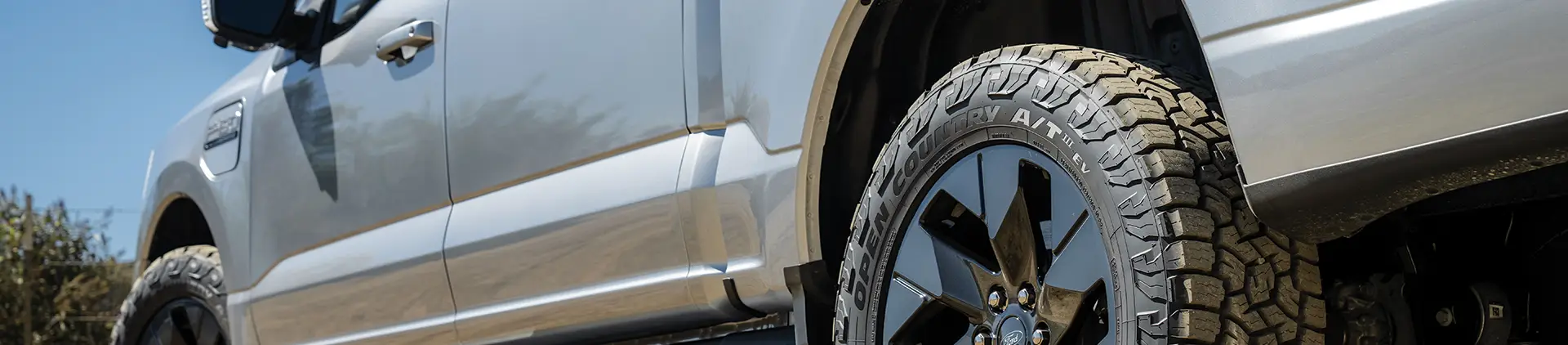
So the recommended tire inflation pressure IS NOT branded on a tire’s sidewall. The series of numbers marked on the tire’s sidewall only provides data regarding the tire’s manufacturing date, its type and its maximum inflation pressure. In other words, your vehicle sticker provides the recommended tire inflation pressure while the information branded on the tire’s sidewall concerns only the maximum pressure the tire is designed to contain.
The maximum pressure that most car tires are designed to contain ranges between 30 and 35 psi (pounds per square inch). Nonetheless, as mentioned above, the tire’s maximum inflation pressure is not its recommended inflation pressure.
Tires inflated at their maximum inflation pressure value are at risk of wearing prematurely because they offer less contact with the road and will wear irregularly, mostly in the middle of the tread surface. The wheel will also tend to bounce on the road. Not only that, but over-inflation increases braking distance and reduces traction. In the case however of under-inflation, the tire’s contact with the road tends to widen beyond the tread.
As a consequence, tire sidewalls will wear more rapidly and may cause the tire to blow out entirely, which in turn can lead to rim damage.
All in all, braking is negatively affected, tires will offer less grip, service life will decrease exponentially as fuel consumption increases and overall tire performance drops. Under-inflated tires simply put you more at risk of experiencing blowouts because of premature wear and excessive heat buildup issues. In short, over or under-inflated tires will bring about an equal number of problems.
Always check the pressure of all your tires as you never know when a tire is losing air following damage caused by a road hazard. Furthermore, take note that the recommended pressure of front and rear tires is not necessarily the same. Check at all times the vehicle manufacturer’s specifications.
Don’t forget to also check the pressure of your car’s spare tire! A spare tire will lose pressure even when it is not driven on.