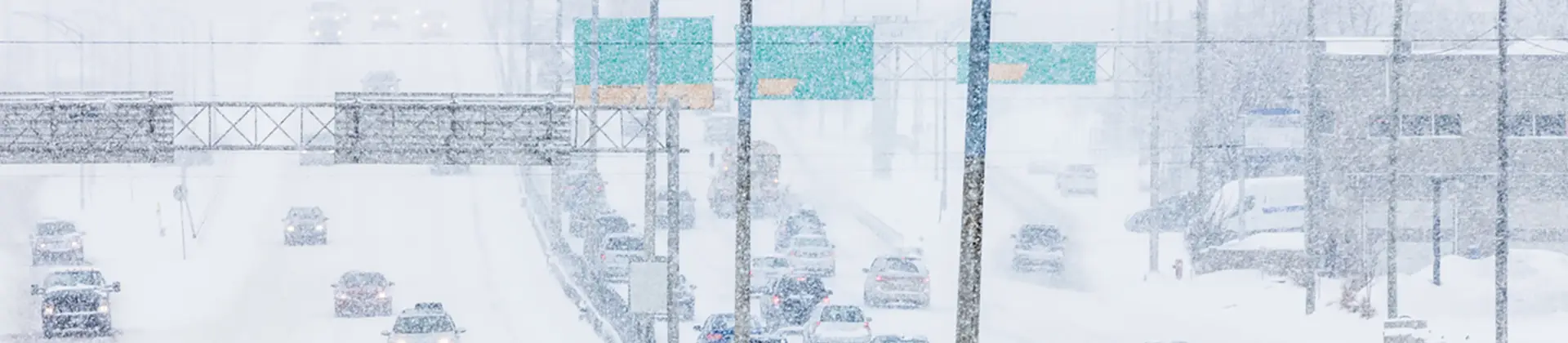
How to Adapt Your Driving on Ice and Snow?

How to Adapt Your Driving on Ice and Snow?

Driving on ice

In Canada it is practically impossible to avoid driving on an icy road. When you hit a patch of ice, the engine of your vehicle can brake and block the drive wheels. In the case of front-wheel drive, this will cause loss of steering control; in the case of rear-wheel drive, the vehicle can start spinning around. In such event:

  • Move the gearshift lever into the neutral position (N);

  • Avoid sharp steering wheel motions;

  • Your best safety option on an icy road remains slowing down and equipping your car with tires that offer maximum grip.

Driving on snow

Good snow tires—but also your driving skills and sound judgment—are your best options for winter driving.

  • First of all, slow down and always maintain a safe distance between you and the vehicle ahead.

  • Remain alert to detect patches of black ice, especially on bridges and under interchanges.

  • Start braking sooner than usual on a snow-covered roadway.

  • Do not pump on anti-lock brakes but rather apply them firmly. If your brakes are not equipped with an anti-lock system, apply them by locking them and releasing them only long enough for steering your vehicle.

And remember—reduced tire inflation pressure does not increase traction in winter. To grip properly on the roadway, your tires must be properly inflated.


Find your new winter tires here. 

You may also like

10 Essential Items To Have In Your Car This Winter

Security

10 Essential Items To Have In Your Car This Winter

When setting off in your vehicle it is important to be ready for any eventuality. Though quite low on anyone’s wish list the unexpected can happen, such as a road accident or a vehicle mechanical breakdown. To have on hand the eme...

Here's the Winter Tire Installation Deadline in Quebec

Security

Here's the Winter Tire Installation Deadline in Quebec

With the cold and snow at our doorstep, drivers must adapt their driving yet again. For everyone’s safety, winter tires are an absolute must. There’s no getting round it; winter tires are mandatory on all vehicles by December 1 un...

6 Tips To Better Adapt Your Driving In Winter

Security

6 Tips To Better Adapt Your Driving In Winter

We probably don’t need to tell you that winter brings its fair share of risks on the road: ice, snow, black ice, wind, poor visibility, and so on! SO, with that in mind, it's a must (as in, you absolutely have to) adjust your...

Forgot your password?

Enter your email address and we'll send you instructions to change your password.

Create an account

Simple and secure, your account allows you to save your settings and view your orders.

Log in

The use of cookies is necessary so that certain functionalities can be used correctly. Please make sure to activate them in order to take full advantage of the site experience.

Starting at $152.99

BLACK FRIDAY

$100 OFF MICHELIN X-ICE SNOW FAMILY

Starting at 152,99 $ See offer
Time remaining
0daydays
7hourhours
52minuteminutes
See offer

Equal payments

Including installation, balancing and environmental fees for selected products.

See more about financing plan

Equal payments

Including, if applicable on selected products, installation and balancing in stores, environmental fees and taxes.

See more about financing plan

The retailer will try to respect your choice, but cannot guarantee it depending on traffic in store. The retailer will contact you within 24-48 hours to confirm the appointment date.

Traction - dry road

Dry-road traction is a tire's ability to brake effectively and respond well to the steering wheel on dry roads.

Traction - wet road

Wet traction is a tire's resistance to hydroplaning and its ability to provide safe driving in wet conditions.

Traction - snowy road

Snow-covered road traction is a tire's ability to operate on partially or completely snow-covered pavement.

Traction - icy road

Ice traction is a tire's ability to operate on partially or completely ice-covered pavement.

Durability

Durability refers to how many kilometres a tire can go before it stops performing.

Comfort/noise

Comfort refers to the ride quality of a tire and the noise it emits on the road.